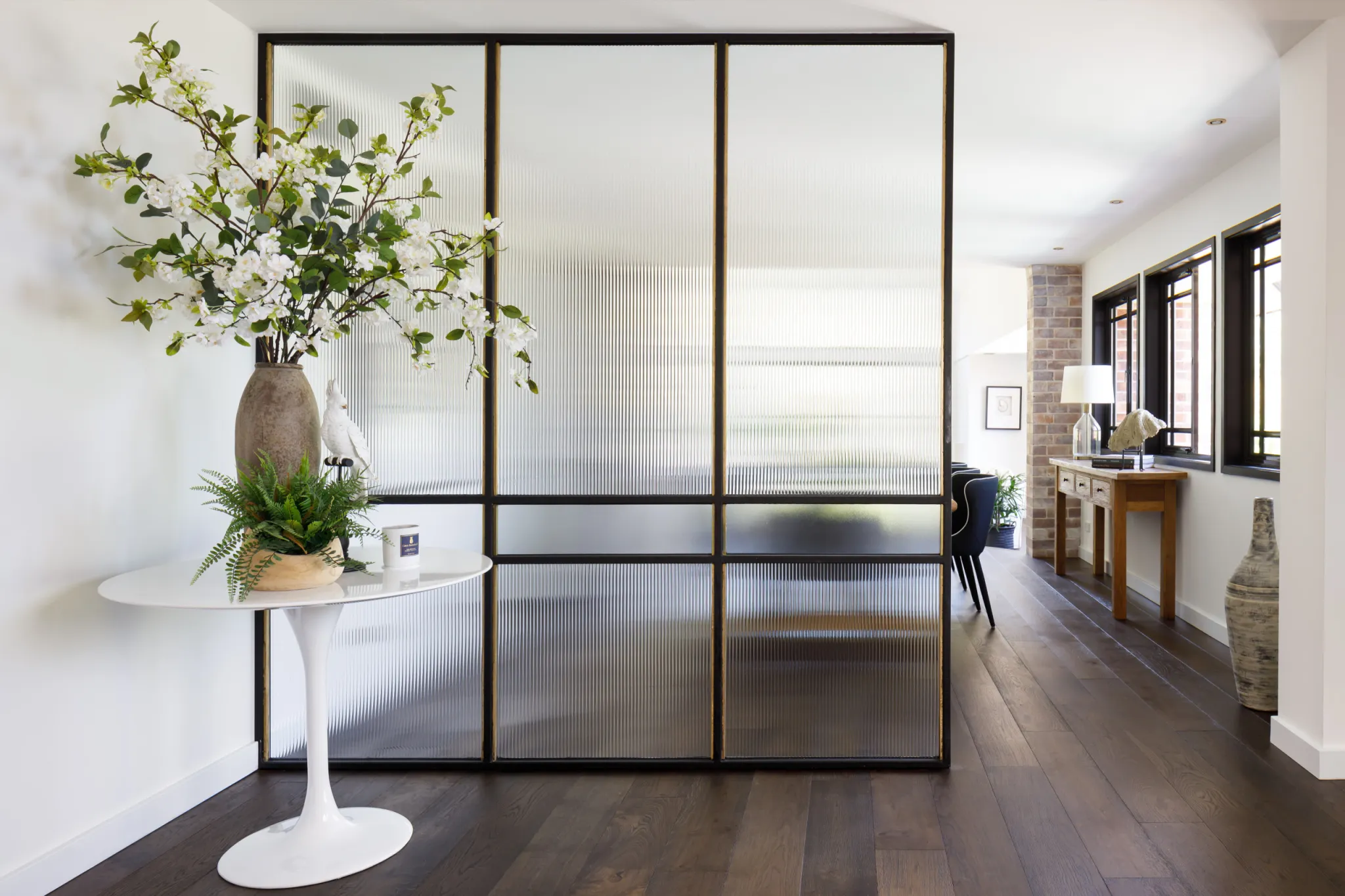
Reeded glass solves a common design conflict: a room needs separation or privacy, but a solid wall or door would block valuable daylight. Its vertical textured surface distorts the view while still allowing light to travel through. Well-planned reeded glass ideas use that balance in doors, partitions, cabinets, bathrooms, and architectural details.
How Reeded Glass Changes Privacy and Light
Reeded glass doesn’t behave like a completely opaque material. Shapes, color, and movement may remain partially visible, but fine details are obscured by the ribbed surface.
That makes it useful for spaces where complete visual isolation isn’t necessary. Hallways, kitchens, home offices, dressing areas, and internal doors can retain a brighter connection to adjacent rooms.
Orientation Changes the Visual Effect
Vertical reeds tend to reinforce height and create an orderly architectural rhythm. They pair especially well with narrow metal or timber frames.
The spacing and depth of the texture also affect visibility. Samples should be viewed from both sides before ordering large panels because photographs rarely show exactly how much detail passes through.
Replace Solid Doors Without Losing Separation
An internal door is often the simplest place to use reeded glass. A darker hallway can borrow daylight from a living room, kitchen, or office while the textured panel prevents a completely clear view.
People browsing home and outdoor design references can apply a similar principle near transitional zones facing patios or gardens. Light can remain part of the interior experience even when stronger visual boundaries are required.
Framed doors are particularly effective because the crisp perimeter contrasts with the rippled surface.
| Application | Main Benefit | Design Consideration |
|---|---|---|
| Internal door | Borrowed daylight | Partial privacy |
| Shower panel | Light transmission | Suitable safety glass |
| Cabinet front | Conceals contents | Shapes may remain visible |
| Partition | Defines zones | Frame proportion matters |
Use Reeded Glass in Kitchens and Storage
Glass-front cabinets can make a kitchen feel lighter, but clear glass exposes every item inside. Reeded glazing provides a middle ground by suggesting depth while reducing visual clutter.
For additional interior material inspiration, consider how textured glass interacts with timber cabinetry, stone counters, painted surfaces, and metal hardware. The material often looks especially crisp beside simple slab or Shaker-style doors.
Backlighting can transform reeded cabinet fronts after dark. Warm internal lighting creates a soft glow while the ribbed glass diffuses direct views of the shelves.
Divide Rooms Without Building an Opaque Wall
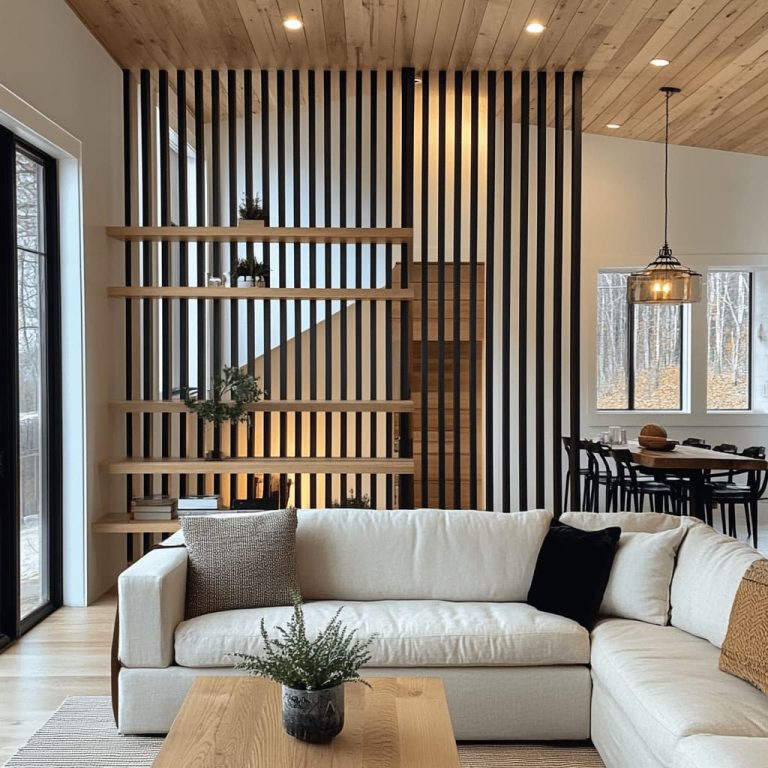
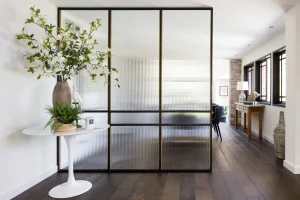
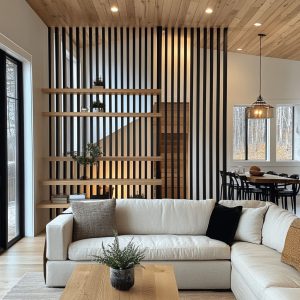
A reeded-glass partition can separate an entry, office, dining zone, or dressing area while retaining a shared sense of daylight. Black metal frames create an industrial character, whereas pale timber gives the feature a softer residential look.
Those aiming for a gentler atmosphere can combine the partition with ideas from cozy interior arrangements, including warm lamps, curtains, upholstered seating, and textured rugs. Hard glass benefits from softer materials nearby.
Consider circulation before adding any partition. Even transparent-looking surfaces occupy physical space, so door swings and walking routes still matter.
What Reeded Glass Cannot Completely Hide
A common misconception is that textured glass guarantees full privacy. Depending on lighting, distance, and the pattern, silhouettes and movement may remain apparent.
That limitation matters in bathrooms and bedrooms. Areas requiring dependable privacy may need curtains, blinds, frosting, layered glazing, or more opaque materials.
Cleaning also deserves attention. Deeply textured surfaces may hold dust or water marks differently from smooth glass. Positioning the textured face appropriately can make maintenance easier.
Frequently Asked Questions
Is reeded glass good for bathroom doors?
It can provide useful visual obscuring while sharing light, but the required privacy level should be considered carefully. For high-privacy areas, a denser or more opaque solution may be preferable.
Can reeded glass be used for kitchen cabinets?
Yes. It can soften views of dishes and stored items while giving upper cabinets more depth than solid doors.
Does reeded glass make rooms look smaller?
Usually it feels lighter than a solid partition because brightness can continue through the surface. Heavy frames or oversized divisions, however, can still visually reduce an already small room.
Use Light as Part of the Layout
Reeded glass is most valuable where a solid surface would solve one problem while creating another. Use it to separate spaces, soften cabinet contents, or borrow daylight from neighboring rooms. Test the privacy level first, then select a frame and application that suit the architecture. Done well, the glass becomes both a practical boundary and an active source of visual texture.